This guide grades the evidence on light and noise at night before recommending anything. It is written for people sleeping in imperfect rooms: a streetlight outside, a thin wall, a snoring partner, a summer dawn at 4:30am. It is also for shift workers, who have to sleep through daylight.
The short answer: darkness matters more clearly than silence
Does sleeping in the dark matter? Yes, and it is one of the better-supported pieces of sleep advice. Light is the main signal your body clock uses, and the lab evidence that light at night interferes with sleep physiology is strong. The good news is that you don’t need a cave. You need "dark enough," which is usually cheap to get.
Noise is less tidy. There is good evidence that intrusive noise, like traffic, aircraft and sudden sounds, disturbs sleep, so blocking it is worth doing. There is much weaker evidence that adding white noise helps, so treat a white-noise machine as a modest experiment rather than a fix. The belief that sleep requires total silence is mostly folklore. Most people sleep fine with a steady, low background.
On confidence: I’m fairly sure of the light findings and the noise-disturbance findings. I’m much less sure about white noise, and there is little direct evidence on masks and earplugs for healthy people sleeping at home.
What’s established about light, noise and sleep
Light is the strongest cue for the circadian system. Light in the evening and at night suppresses melatonin and pushes the body clock later. That makes it harder to fall asleep at your usual time and easier to wake early when dawn arrives. This isn’t a wellness claim. It is basic, well-replicated sleep physiology.
For noise, the clearest official position comes from the World Health Organization. Its 2018 Environmental Noise Guidelines for the European Region set recommended night-time limits for different sources, based on evidence that noise disturbs sleep:
- Road traffic: below 45 dB (Lnight)
- Aircraft: below 40 dB (Lnight)
These figures are outdoor levels averaged over the night at the most exposed front of a building. They are not a target for your bedroom meter. What they establish is that sustained traffic and aircraft noise at night is a recognised sleep problem, not a matter of taste.
What isn’t established anywhere authoritative is that a healthy sleeper needs absolute silence. The guidance is aimed at disruptive noise, not at every sound.
What the research on light, noise and white noise shows
Light during sleep: well supported, with some caveats. Melatonin suppression by light is some of the most robust work in sleep science. A 2022 Northwestern University study published in PNAS went further. It found that sleeping one night with moderate overhead room light raised heart rate and next-morning insulin resistance in healthy young adults, compared with sleeping in dim light. It was a small lab study covering a single night, so it’s a signal worth taking seriously rather than a settled verdict. Larger studies linking light at night to weight gain and metabolic problems are observational. They show associations, not proof that the light caused the harm.
Intrusive noise: well supported. Traffic and aircraft noise can trigger brief arousals and shifts to lighter sleep, often without you remembering waking. From my years running overnight studies, the pattern was consistent: it was rarely steady sound that fragmented a recording. It was change, such as a door, a passing truck or a sudden snore.
Earplugs and eye masks: reasonable but thin. Much of the direct trial evidence comes from hospital and intensive-care settings. There, reviews have found some benefit for sleep, but the studies are generally low quality. It’s plausible the benefit carries over to a noisy flat, but that is inference, not a finding.
White noise: thin. A 2021 systematic review in Sleep Medicine Reviews found the evidence that continuous noise improves sleep to be low quality. It concluded the evidence did not support recommending it as a sleep aid. Some people find it helpful. That’s fine, as long as it’s sold as that and nothing more.
The open questions
Nobody has a precise threshold for "dark enough" in a real bedroom. It likely depends on how bright the light is, what colour it is, how long it lasts, and whether your eyes are closed. A small standby LED is almost certainly not a meaningful problem for most people, but that’s reasoned judgement rather than a measured cut-off.
It’s also unclear who benefits from white noise. It may help mask intermittent sounds for some people, and it may do nothing or mildly fragment sleep for others. We don’t know how to tell in advance which group you’re in.
The effect of long-term earplug use in healthy home sleepers is barely studied.
Why darkness and steady sound behave differently
Light reaches the body clock through specialised cells in the retina, and some light passes through closed eyelids. That’s why a bright room still registers while you sleep.
The sleeping brain keeps monitoring sound, and it is tuned to notice change. A sudden noise can pull you into lighter sleep even when a louder steady hum wouldn’t. This explains why blocking intrusive sound makes sense. It is also the theory behind white noise: raising the background so spikes stand out less. The theory is sensible. The trials just haven’t confirmed it well.
A fix-it ladder: free changes before buying anything
Start at the bottom and stop when the room feels right.
Free:
- Unplug or cover glowing LEDs and chargers.
- Turn clocks away from the bed.
- Move the bed so a streetlight gap or the window doesn’t hit your face.
- Shut the bedroom door against hallway light and household noise.
- If a shared wall is the problem, try swapping the bed to the other wall.
Morning light helps too: getting outside early steadies the clock that night-time darkness protects. Our bedroom-temperature guide covers the other half of the same room, since a cooler bedroom matters as much as a darker one.
Blackout curtains or a blind: buy these if dawn or streetlight is waking you. Coverage matters as much as fabric, so choose panels wider and longer than the window, or a blind fitted closely inside the frame, because light leaks in around the edges. This pair is two 50 × 84-inch polyester panels with a blackout coating, a 3-inch rod pocket and back tabs. Hooks aren’t included. The manufacturer also markets it as insulating, which I haven’t tested.
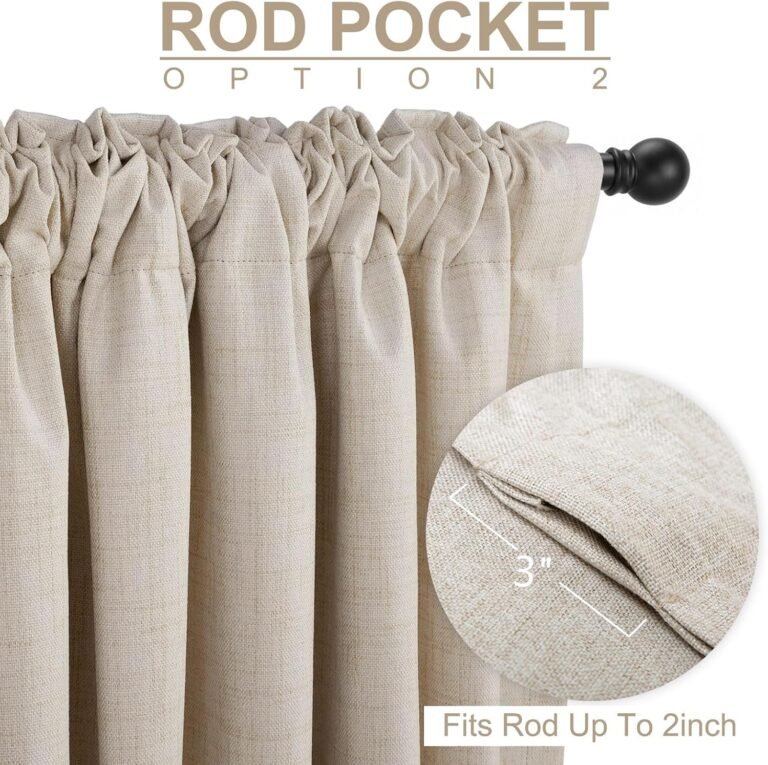
Blackout Shield
Linen Total Blackout Curtains for Bedroom Living Room 84 Inch,
These curtains are for bedrooms, nurseries, home offices or other rooms where controlling incoming daylight matters. They’re particularly useful for people who sleep during daylight hours, want a darker bedroom at night, or need to reduce the amount of sunlight entering a room during the day.
Affiliate link — we may earn a commission, at no extra cost to you.
Eye mask: a mask is cheaper and goes where you go, but it has to stay on and not press on your eyes. Contoured masks suit side sleepers better than flat ones. This one uses recessed memory-foam eye cups, a padded nose bridge and a 19–28-inch strap. How well any mask seals depends on your face.
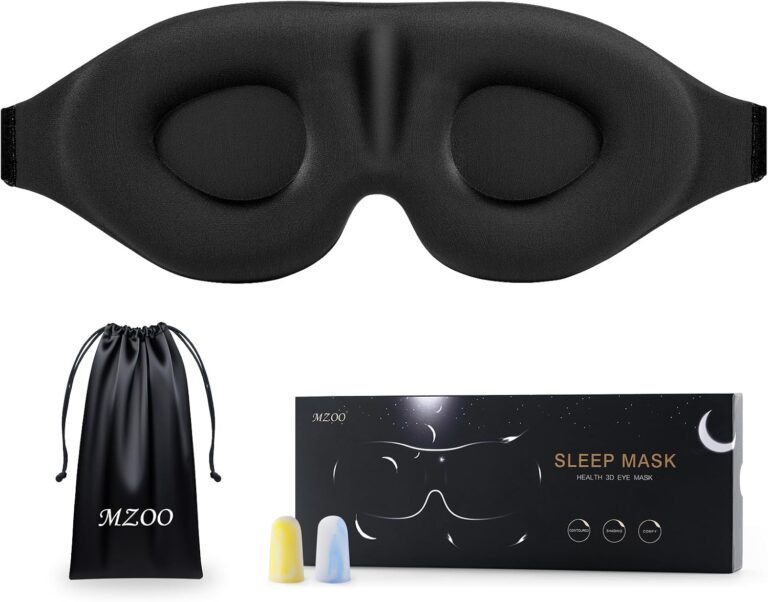
MZOO
MZOO Luxury Sleep Mask for Women Men Patented Light Blocking Design
The MZOO sleep mask is for people who need to block ambient light while sleeping, napping or traveling. Its contoured design makes it especially relevant to side sleepers and anyone who dislikes conventional masks that press against the eyelids or leave gaps around the nose.
Affiliate link — we may earn a commission, at no extra cost to you.
Earplugs: these are for traffic, a shared wall or a snoring partner.
- Foam plugs usually block the most sound. Check the noise reduction rating on the pack.
- Silicone or wax plugs seal over the ear canal rather than inside it. Some people find them more comfortable, though they tend to block less.
White noise: try a free phone app for a couple of weeks before buying a machine, and keep the volume modest.
Shift workers: skip straight to proper blackout coverage plus a mask, and earplugs for daytime noise. Your problem is daylight itself, which no free fix beats.
Snoring: if your partner snores loudly, especially with pauses in breathing, gasping or daytime sleepiness, earplugs solve your night but not theirs. That pattern can signal sleep apnoea and belongs with a clinician. The same goes for persistent insomnia, and for sleep problems in children or during pregnancy.
What this analysis can’t settle
None of this is medical advice. I haven’t measured light or sound in your room, and the products above weren’t lab-tested for this piece. Much of the evidence on masks and earplugs comes from hospitals, not homes. The white-noise conclusion rests on a review of studies that were themselves weak, so it could shift as better trials appear.
Bottom line: buy for a real problem, not for total silence
Aim for a room that is dark enough and free of sudden noise, not one that is perfectly black and silent. Most of that is free. Spend where a specific problem remains, like dawn light, a street outside or daytime sleep after a night shift. If nothing is bothering you, you probably don’t need anything. You don’t have to fix this all tonight.
Reader questions
Frequently Asked Questions
Short answers to the questions people ask most about dark and quiet bedrooms.
Blackout curtains vs eye mask: which is better?
Curtains darken the whole room and suit people who dislike anything on their face, or who share the bed. A mask costs less, travels well and works anywhere. Shift workers often do best with both.
Do white noise machines help you sleep?
The evidence is thin and low quality. Some people like the masking effect. Test a free app first, and only buy a machine if you notice a clear difference over a couple of weeks.
Is it safe to wear earplugs every night?
Many people do so without trouble. Keep them clean, replace foam plugs regularly, and don’t push them in too deep. If you notice ear pain, discharge or blocked-feeling ears, check with a clinician.
Does a small standby light ruin sleep?
Probably not for most people. The stronger evidence involves brighter room light. Still, covering an LED costs nothing, so it’s an easy first step if you notice it.