
This is a label-forensics walkthrough for anyone about to buy a multi-ingredient nootropic stack. It is also for anyone who already bought one, felt nothing, and wants to know whether the doses were ever plausible.
Why the label matters more than the marketing
The question most people are really asking in the supplement aisle is "Will this do anything?" The label can’t answer that directly. What it can tell you is whether the product even contains the amounts that human studies used. For a surprising number of focus products, it doesn’t.
The rules also allow a lot of opacity. Under US dietary supplement labeling rules, a product can group ingredients into a "proprietary blend." The Supplement Facts panel must list the blend’s total weight and its ingredients in descending order by weight. It does not have to state how much of each ingredient is in there. That is legal, and it often makes the label meaningless for your purposes.
By the end of this piece you should be able to do four things with a real label:
- estimate the maximum possible dose of each blend ingredient
- convert per-serving amounts into what you’d actually take per day
- compare those amounts with studied doses
- recognise the ingredient names that signal a research chemical or an unapproved drug
What you’ll need
Before you start, gather four things:
- The product’s full Supplement Facts panel, either in hand or as a clear photo. The front of the box is not enough — marketing copy on the front routinely omits the proprietary blend’s ingredient list, and that list is what the whole method below depends on.
- A phone calculator. Check 2’s math is just division, but it’s division you don’t want to eyeball once a blend runs past ten ingredients, and a wrong estimate there throws off every check that follows it.
- The reference doses in Check 4, so you have something concrete to compare against instead of guessing whether a number sounds high or low.
- Five minutes and a willingness to walk away. That last one matters more than it sounds: if the math shows a blend can’t reach a studied dose, the honest move is to skip it, not to talk yourself into a lower bar because you already picked up the bottle.
Check 1: Find the blend and its total weight
Work through these five checks in order — each one builds on the last, and skipping ahead usually means missing the number that would have told you to put the bottle back.
Look for the words "proprietary blend," "matrix," "complex" or a trademarked formula name with a single weight beside it. Write down that weight and count the ingredients under it. You’ll know it worked when you have two numbers, such as "1,200 mg, 14 ingredients." If there’s no blend and every ingredient has its own amount, skip ahead to Check 3.
Check 2: Work out the maximum each ingredient could be
Blend ingredients are listed from heaviest to lightest. That means the ingredient in position n can be at most the total weight divided by n.
Take a 1,200 mg blend with 14 ingredients:
- The fourth ingredient is at most 300 mg.
- The tenth is at most 120 mg.
- The fourteenth is at most about 86 mg.
Those are ceilings. The real amounts are usually lower, because the first ingredient is often filler-heavy or cheap. You’ll know it worked when you have a maximum for every ingredient you care about.
Check 3: Do the per-serving and per-day math
Read the serving size carefully. "Serving size: 3 capsules" means all the numbers apply to three capsules, not one. Then check the directions. "Take 1–2 servings daily" can quietly double the dose the marketing is built around, and it also halves how long the bottle lasts.
The bottle-level math works like this. A 90-capsule bottle at 3 capsules per serving is 30 servings. At two servings a day, that becomes 15 days. You’ll know it worked when you know the daily dose, and the cost per day, at the intake the label actually recommends.
Check 4: Compare each dose with human evidence
These are the doses studied in adults, drawn from the research I trust most:
- Caffeine: alertness effects show up at roughly 75–200 mg. This has the strongest evidence of anything on most stacks.
- L-theanine: usually 100–200 mg, most often studied alongside caffeine. The trials are small and short, and they measure acute attention tasks in healthy adults. The effect is plausible but modest.
- Creatine monohydrate: 3–5 g daily. The cognitive benefits are clearest in sleep-deprived people, vegetarians and older adults. They are inconsistent in well-fed younger adults.
- Worth noting: 3 g of anything does not fit inside a capsule blend. If creatine appears in a 1,200 mg matrix, it is there for the label, not for you.
- Omega-3s: the label should state EPA and DHA in milligrams, not just "fish oil." A cognitive benefit in healthy, well-nourished adults has not been shown. The relevance is mainly for people who eat little oily fish.
You’ll know it worked when each ingredient is marked "at studied dose," "can’t reach it," or "no human evidence."
Check 5: Scan for names that signal a drug, not a supplement
Put the bottle down if you see any of these:
- Racetams: piracetam, aniracetam, or omberacetam (sold as Noopept).
- Phenibut: a GABA-analogue with documented dependence and withdrawal problems.
- Vinpocetine: the FDA has warned that people who are or may become pregnant should not take it.
- Unfamiliar stimulants: stimulant names you don’t recognise, especially ones listed only by a chemical name.
This is not a theoretical risk. Cohen and colleagues have repeatedly tested products sold as cognitive or brain-health supplements. They found unapproved drugs, including omberacetam, phenibut and vinpocetine, sometimes at pharmaceutical-range doses. Some products contained drugs that weren’t declared at all, and some declared amounts didn’t match the contents.
That last finding sets the limit of this method. A label can only tell you what the maker claims. You’ll know it worked when the ingredient list contains nothing you’d need a prescription, or a chemistry degree, to identify.
Common mistakes
- Treating the ingredient count as value. Fourteen ingredients in 1,200 mg is a warning, not a feature.
- Reading doses per capsule when the serving is three capsules. This one error can make a product look three times cheaper than it is.
- Ignoring caffeine from other sources. A stack with 150 mg of caffeine, plus coffee, plus a pre-workout adds up faster than people expect.
- Taking "third-party tested" on the brand’s word. Look for a named certifier you can check, not a vague badge on the box.
Practical tips
Single-ingredient products are easier to evaluate for a simple reason. The dose is printed, you can match it against the research, and you can stop taking it if nothing changes. They are also usually cheaper per effective dose than a stack.
One honest aside: if you’re sleeping five hours a night, no label will out-perform fixing that. I’ll say it once and move on.
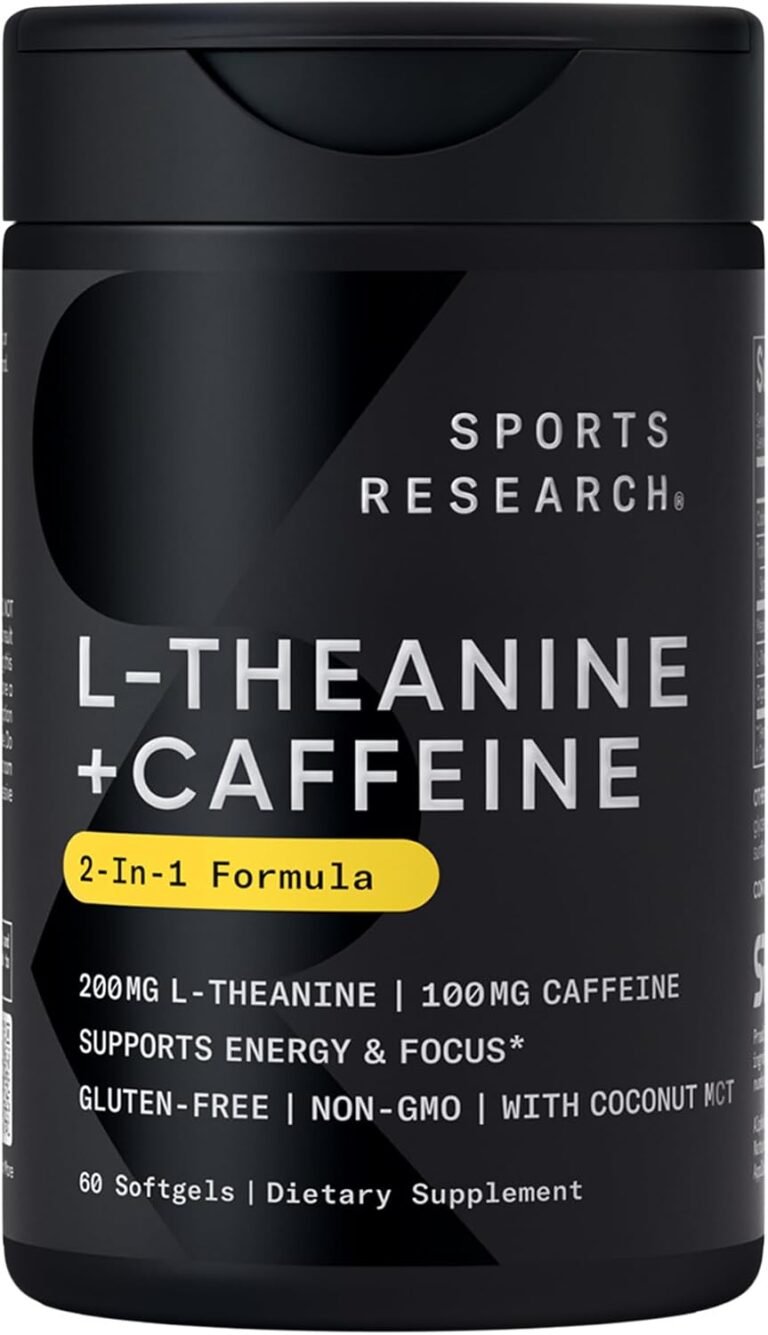
If you want the caffeine–theanine combination with the doses spelled out, this product states 100 mg caffeine and 200 mg L-theanine per softgel, with 60 softgels per bottle. That sits inside the studied range.
The limitation is that the combination trials are small and acute. Plain caffeine may do most of the work, so try caffeine alone first if you want to know. And count this toward your daily caffeine total.
Sports Research
Sports Research® L-Theanine + Caffeine Nootropic Supplement
This supplement is for adults who want a convenient, precisely measured source of caffeine combined with L-theanine. It can make sense for situations where predictable caffeine intake matters, such as focused desk work, studying, or training. The 100 mg caffeine dose also makes it easier to track caffeine consumption than relying on beverages whose caffeine content can vary considerably.
Affiliate link — we may earn a commission, at no extra cost to you.
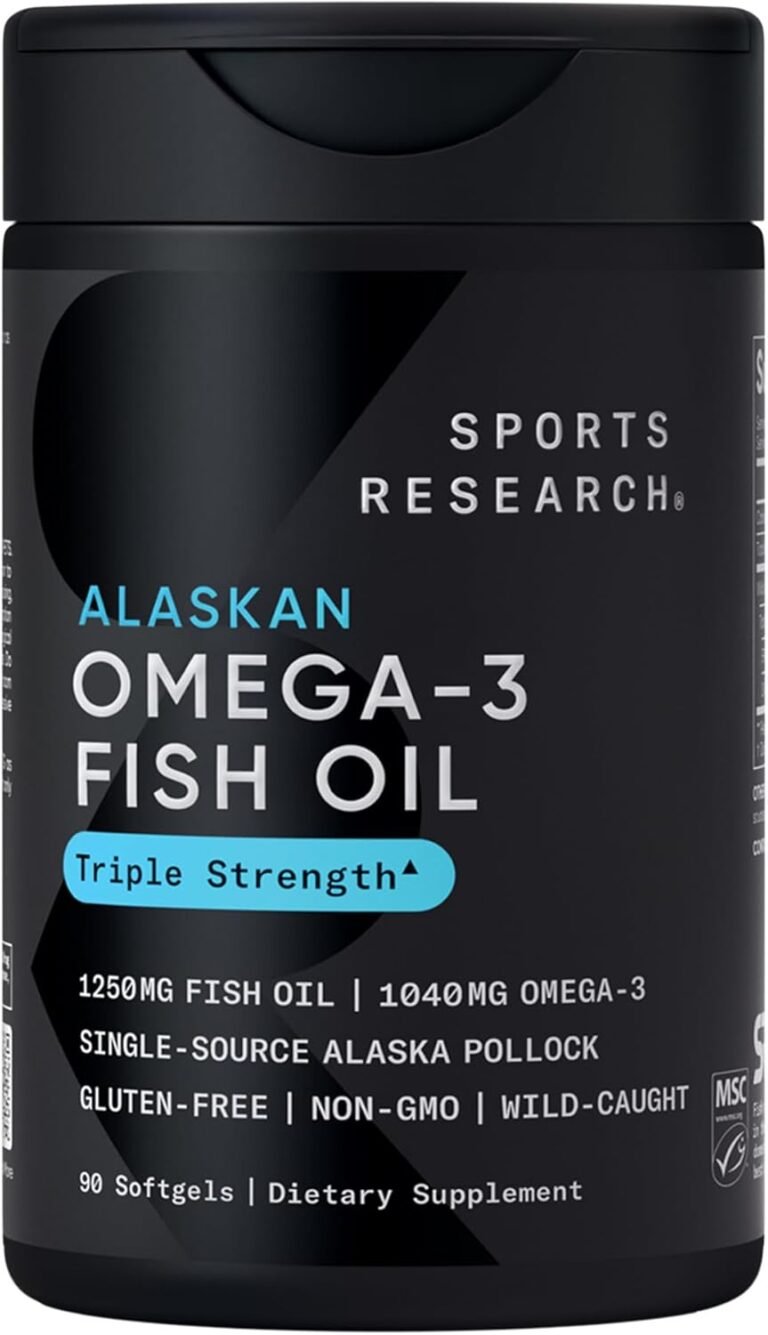
If you eat little oily fish, a fish oil that states EPA and DHA is the sensible format. This one lists 690 mg EPA and 260 mg DHA per softgel. The manufacturer says it is IFOS-tested, and batch records are available.
The limitation is the same as above: this covers a dietary gap. It is not a demonstrated focus aid in healthy adults.
Sports Research
Sports Research® Omega-3 Fish Oil 1250mg from Wild Alaska Pollock, 90 Count
Sports Research Omega-3 Fish Oil is for adults who want a concentrated dietary source of EPA and DHA in a convenient softgel. It is particularly relevant for people whose diets provide relatively little oily fish and who are specifically looking for a supplement with a substantial amount of EPA and DHA per capsule. The one-softgel format also makes it easier to incorporate into a routine than products requiring several capsules to reach a comparable labeled amount of omega-3s.
Affiliate link — we may earn a commission, at no extra cost to you.
FAQ
The questions below are the ones readers ask most often once they’ve worked through the five checks above and still have a specific label or a specific result in front of them. How to read a nootropic supplement label is the process of turning a Supplement Facts panel into three answers: what a serving actually contains once you account for blend weight and serving size, whether that amount comes close to a dose used in human research, and whether any ingredient belongs on a supplement label at all rather than a prescription pad. The FAQ below doesn’t repeat that process — it covers the edge cases that come up after you’ve run it: whether a proprietary blend is legal in the first place, what a month of feeling nothing actually tells you, and how much weight to put on a third-party testing badge. None of these substitute for doing the math yourself on the label you’re actually holding.
When to put the bottle back
You should now be able to take any stack label and do four things:
- estimate each blend ingredient’s maximum dose
- convert serving sizes into what you’d take per day and what it costs per day
- check each dose against human evidence
- spot the names that don’t belong in a supplement
My verdict is specific. Put the bottle back if the blend hides the doses that matter, if the key ingredients can’t mathematically reach studied amounts, or if you see a racetam, phenibut, vinpocetine or an unfamiliar stimulant.
On both evidence and cost, dose-disclosed single ingredients beat stacks. If you take prescription medication, have a diagnosed condition, are pregnant, or are buying for a minor, talk to a clinician first.
FAQ
Are proprietary blends legal?
Yes. Under US dietary supplement labeling rules, a manufacturer can group ingredients into a proprietary blend as long as the Supplement Facts panel lists the blend’s total weight and the ingredients in descending order by weight, from most to least by mass. Regulators don’t require the specific amount of each ingredient inside the blend, and manufacturers generally don’t volunteer it, since it would let competitors reverse-engineer the formula. Legal is not the same as informative, though. Take a 1,200 mg blend with 14 ingredients: everything you know for certain is that ingredient one weighs the most and ingredient fourteen weighs the least, plus the ceiling math from Check 2 above. You still can’t tell whether any single ingredient, especially one near the bottom of the list, reaches a studied dose. That gap is legal by design, and it’s the main reason blends deserve more scrutiny than labels with individual amounts listed.
I took a stack for a month and felt nothing. Was the dose the problem?
Often, yes. Run the Check 2 ceiling math on your label before assuming the ingredient itself doesn’t work. Take that same 1,200 mg, 14-ingredient blend: if creatine sits in position eight, its ceiling is 150 mg, nowhere near the 3-5 g daily dose the creatine research actually used. No amount of patience fixes a dose that’s off by a factor of twenty. That said, dose isn’t the only variable. A month is short for anything except caffeine, which works within the hour or it doesn’t. And even at a properly studied dose, most ingredients beyond caffeine have effects described as modest, inconsistent, or limited to specific groups, like sleep-deprived people or older adults, rather than a noticeable difference for a well-rested, well-fed adult. So the honest sequence is: check the math first, then adjust your expectations for the ingredient’s actual evidence base, not just the dose.
Is Noopept a supplement?
No. Noopept is a brand name for omberacetam, a racetam-family compound that is not an approved drug in the US and does not meet the legal definition of a dietary ingredient either. It’s approved as a prescription drug in Russia, sold there under medical supervision at doses and purity a research audit can actually verify, which is a very different situation from an unregulated capsule shipped to a US buyer. It has repeatedly turned up in products marketed as cognitive or brain-health supplements, sometimes at levels closer to a pharmaceutical dose than a supplement dose. Because it’s unapproved, there’s no US regulatory testing requirement that would catch a mismatch between the labeled amount and what’s actually in the capsule. Seeing omberacetam or Noopept on an ingredient list is a clear reason not to buy that product, not a gray area worth debating.
Does third-party testing guarantee a product is safe?
No, but it helps, and it’s worth understanding what it actually checks. A named, checkable certifier such as NSF Certified for Sport, USP Verified, or Informed-Choice tests for things like heavy metals, microbial contamination, and whether the label’s claimed ingredients and amounts match the capsule’s actual contents. That reduces the risk of contamination or outright substitution, which matters given how often audits of the supplement industry turn up mismatches. What it doesn’t do is evaluate whether the ingredients work, or whether the dose on a certified label is high enough to do anything. A product can be certified, accurately labeled, and still contain doses too low to match the research it’s marketed around. Certification is a floor for manufacturing honesty, not a verdict on effectiveness. Treat a badge as one input, and still run the Check 2 through Check 4 math yourself before deciding the product is worth the price.
Is a stack ever better than single ingredients?
Only in a narrow set of cases, and it’s worth being specific about when. A stack earns its price over single ingredients when every dose is disclosed rather than hidden in a blend, every disclosed dose sits at or near a studied level, and the combined price beats buying the same ingredients separately and taking them alongside each other. The caffeine and L-theanine combination discussed above is close to this: both amounts are stated, both sit inside their studied ranges, and buying them pre-combined in one softgel is arguably more convenient than dosing two separate products daily. That combination is genuinely uncommon. Most multi-ingredient stacks fail on the first condition alone, because proprietary blends exist specifically to avoid disclosing individual amounts. So the honest default is to assume a stack is worse than single ingredients until the label proves otherwise, not the other way around.