For the owner about to add a second or third connected device to the house, and for anyone looking at a renewal notice wondering what the collar, camera or feeder actually does if they stop paying. This is how to price three years of it, and how to work out what degrades.
Introduction
Four categories of connected pet gear are being compared here, and they are not comparable in the way the marketing implies: cellular GPS trackers, Wi-Fi cameras with cloud video plans, app-scheduled feeders, and hardware that charges you once and then leaves you alone.
The decision doesn’t turn on the monthly price. It turns on two questions nobody puts in a product description. First, what does this thing still do with no subscription and no internet? Second, what does the total look like over three years, sitting next to the hardware price you were actually comparing when you chose it?
And underneath both of those is a welfare question. A camera going dark is an inconvenience. A feeder going dark is a dog who didn’t eat.
Quick comparison
The three-year arithmetic is simple and almost nobody does it: hardware price, plus the monthly fee multiplied by 36, adjusted for any multi-year prepay discount. For a cellular tracker, that second number is usually the bigger one by a wide margin. Prices and plan terms change often enough that any figure I quoted today would be wrong by the time you read it, so run the multiplication yourself against the current page before you buy.
| Category | What the fee buys | What still works if you cancel | With no internet at all | Three-year cost driver | |—|—|—|—|—| | Cellular GPS tracker (Tractive, Whistle, Fi) | Mobile data for live location and history | Little to nothing location-related; some models retain Bluetooth or activity features — verify per brand | No live location; collar cannot report | Monthly plan, typically well above hardware over 36 months | | Wi-Fi camera with cloud plan | Recorded video history, longer retention, some smart alerts | Live view and, on cameras with a card slot, local recording | Usually no remote viewing; local recording may continue | Optional plan; hardware plus a memory card can be the whole cost | | App-scheduled feeder | Remote control, notifications, feeding logs | Varies enormously by model — some keep the on-device schedule, some don’t | Depends entirely on whether the schedule runs on the device | Hardware; subscription optional on most, but cloud dependency is the real risk | | Water fountain | Rarely a subscription at all | Pumping and filtering | Pumps normally on nearly all models | Replacement filters, not software | | Subscription-free GPS containment (Dogtra GPS Fence) | No recurring fee; app used for setup | Boundary function, per the manufacturer, once configured | Collar operates independently of your phone | Hardware only |
Individual evaluations
Cellular GPS trackers
This is the one subscription I consider honest. A Tractive, Whistle or Fi collar has a SIM in it, and somebody has to pay a mobile network every month for that SIM to exist. Cancel, and there is no data connection, which means no live location — the core function is gone, not degraded. Some of these collars keep Bluetooth-range or activity features running without a plan, and the brands differ on this, so check the current terms rather than trusting a forum post from three years ago.
What I’d push back on is pricing it as an accessory. Over 36 months, the plan is the product and the collar is the sample. Budget it like a phone line.
Pet cameras
Cameras are where the subscription is most often genuinely optional, and where owners most often pay anyway. A cloud plan buys recorded history and longer retention. Live view generally survives cancellation, and on any camera with a card slot, so does local recording.
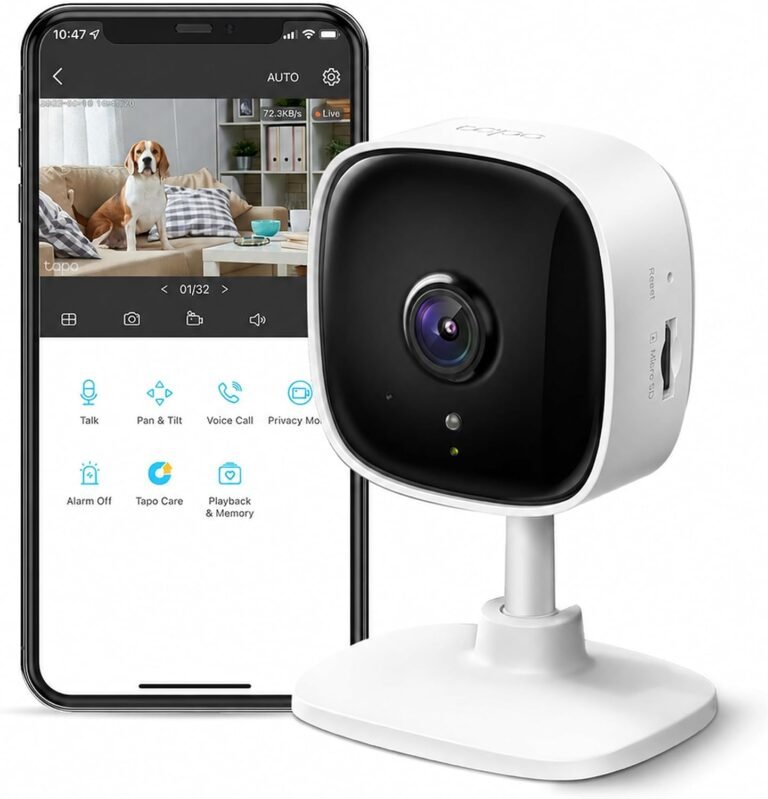
That card slot is the whole point. TP-Link’s documentation for the Tapo C200 lists microSD support up to 512GB, with core functions and local recording usable without a Tapo Care plan; the card is bought separately. The catch is that local storage lives inside the camera, so if the camera is unplugged or walks off, the footage goes with it — and scrubbing a card is clunkier than a cloud timeline.
Tapo
Tapo 1080P Indoor Security Camera, Baby Monitor, Dog Camera, Wired, C100
The Tapo C200 is for pet owners who want to check on their animals remotely without investing in an expensive dedicated pet-monitoring system. It works particularly well for watching pets while you’re at work, travelling, or simply in another part of the house. The pan-and-tilt movement, motion tracking, night vision, and two-way audio make it useful for more than simply checking a static video feed. It can also work as a general indoor security or monitoring camera, so its usefulness isn’t limited to pet care.
Affiliate link — we may earn a commission, at no extra cost to you.
Smart feeders
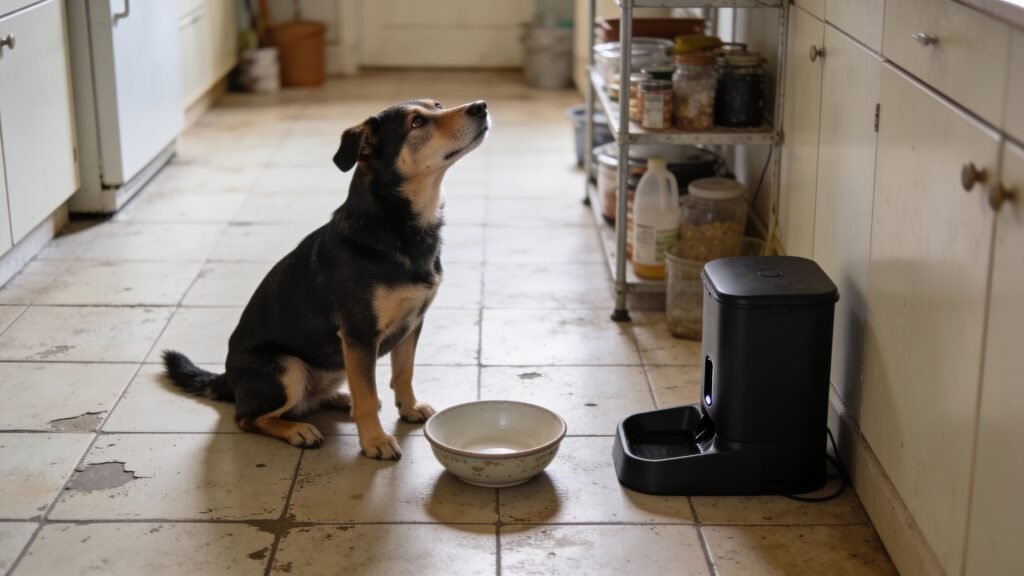
This is the category where cloud dependency stops being a billing question. Some feeders hold the schedule on the device and use the internet only to push changes and send notifications. Others ask a server what to do at mealtime. From the outside, on the product page, these look identical.
Petnet’s SmartFeeder is the case worth knowing. Owners reported meals that never dispensed during a service outage, and the product was later wound down along with the app that ran it. Whatever the specifics, the lesson holds: a feeding schedule that lives on someone else’s servers is only as reliable as their worst week.
Before you rely on any connected feeder, confirm three things in the manual: the schedule runs on the device, there is a physical manual-dispense control, and there is battery backup for a power cut.
Fountains
Mostly a non-issue. Fountains recur in filters, not software, and a pump that needed a login would be absurd. If you’re looking at an app-connected model with drinking-volume tracking, just confirm the pump runs with the Wi-Fi off — and for cats in particular, keep the plain version of the job in view, which is water they’ll actually drink.
Key differences
The real split isn’t cheap versus expensive. It’s whether the fee pays for a service you’re consuming or gates hardware you already own.
Cellular data is a service. Cloud storage is a service. Paying monthly for those is a fair trade, and if you cancel, you stop receiving something that costs the company money. But a feeder that won’t dispense on schedule without a server, or a tracker whose stored history you can’t export, is charging you for access to your own device and your own animal’s data.
The second difference is consequence. Rank your devices by what happens on the vendor’s worst day. A dark camera means you don’t get to see the cat on the sofa. A dark feeder means a missed meal, and for a diabetic cat on timed insulin, that’s a clinical problem, not a nuisance. A containment system that fails quietly is a dog in the road.
Best for
If your dog has escaped before, or could: pay the cellular subscription, and stop treating it as optional. Recovery needs live location, and live location needs a data plan. There is no subscription-free version of that function that works when the dog is two miles away.
If you mainly want to see what’s happening: a camera with a card slot, no cloud plan, and a memory card. You’ll get live view, alerts and local recording for a one-time cost.
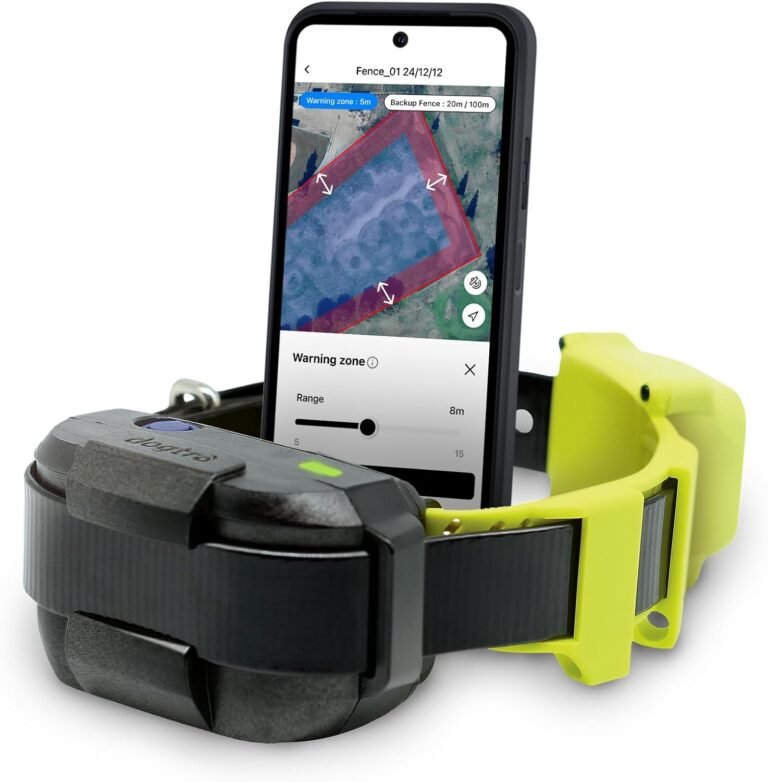
If the problem is a dog with acreage and no fence: a subscription-free containment collar is the sensible answer, as long as you understand it’s containment and not recovery. Dogtra’s GPS fence is configured in the app and then, per the manufacturer, runs from the collar rather than needing your phone connected; it’s specified for properties around three-quarters of an acre and up, and for dogs of roughly 15lb or more. It will not find a dog who has already gone.
Dogtra
Dogtra GPS Fence – No Subscription
The Dogtra GPS Fence is for dog owners who want to establish an outdoor boundary without building a physical fence or paying for an ongoing GPS-tracking subscription. It is particularly suited to medium and large dogs with access to a sufficiently large outdoor area. It can be useful for properties where traditional fencing is impractical, expensive, or undesirable, while still giving the dog more room to move. It is primarily a containment system—not a replacement for a live GPS tracker designed to locate a lost dog.
Affiliate link — we may earn a commission, at no extra cost to you.
If you travel and need meals covered: the feeder that keeps its schedule offline beats the feeder with the better app, every time.
Buying considerations
Five things to check before you buy or renew, all of which you can do in about ten minutes:
- Find the offline paragraph in the manual, not the FAQ. Search the PDF for "offline," "manual" and "power failure." If the manual is silent, assume the worst.
- Test what you already own. Turn your router off for a day and see whether the scheduled meal still drops. Do this while you’re home, not the night before a trip.
- Look for a physical button. Manual dispense and battery backup are worth more than any app feature on a feeder.
- Ask whether history is exportable. Weight trend, activity trend, feeding logs — if you can’t get them out, they’re a rental, and they’re the part your vet might actually want to see.
- Read the cancellation terms before the first payment. Whether plans can be paused, whether prepaid years are refundable, and what happens to stored video on the day you stop.
And be wary of lifetime plans. Paying once looks like escaping the subscription, but it only pays off if the company outlives the hardware — and you’ve handed them the money up front to find out.
Verdict
Rent the information, own the function. Location data and video history are reasonable things to pay monthly for, because you’re buying a service that genuinely costs someone money to provide. Food, water and containment are not. Those three should work with the router unplugged, the account cancelled and the company gone.
So the rule I’d hold to: never let a meal, a bowl of water or a boundary depend solely on a vendor’s servers. If a feeder can’t keep its schedule offline and has no manual dispense, it isn’t a cheaper feeder with fewer features — it’s a feeder with a single point of failure you don’t control.
Before your next renewal, do the multiplication. Monthly fee times 36, next to the hardware price. If the answer makes you wince, you’re not being cheap; you’re finally seeing what you bought.
Reader questions
Frequently Asked Questions
Does pet tech work without a subscription?
It depends entirely on the category. Cameras and feeders usually retain their core functions without a plan, though you’ll lose cloud video history and some remote features. Cellular GPS trackers largely don’t — no data plan means no live location, because the collar has nothing to report over. Check the specific model’s manual rather than assuming, because two feeders that look identical can behave completely differently with the internet off.
What happens to my device if the company shuts down?
If the device depends on the company’s servers for scheduling, streaming or location, it stops doing that job and there’s usually no fix. Petnet’s SmartFeeder is the reference case — owners reported undelivered meals during a service outage, and the product was later wound down. Devices that run their logic on-board, or store video to a local card, generally keep working in a reduced form.
Can I export my pet’s data before I cancel?
Sometimes, and it’s worth finding out before you stop paying rather than after. Activity, weight and feeding logs are the records most likely to be useful in a vet conversation about a slowing older dog or a cat losing condition. If there’s no export, screenshot the trend graphs you care about while you still have access.
Is an annual or multi-year plan actually cheaper?
Per month, usually yes. The trade-off is that you’re pre-paying a company whose service you can’t evaluate yet, and refund terms on prepaid time vary. I’d take a monthly plan for the first few months on any new device, confirm it holds up, then switch to annual if you still want it.
Do smart water fountains need a subscription?
Almost never. The recurring cost of a fountain is filters, not software, and the pump runs regardless of whether your Wi-Fi does. If you’re buying an app-connected model that tracks drinking volume, just confirm the pump operates independently of the connection — and remember the tracking number is a trend to watch over weeks, not a figure to read daily.