If you’re about to spend serious money on a recovery or sleep wearable, this is the comparison nobody runs: what the platform costs over three years, what stops working the day you cancel, and whether you can take years of sleep and strain data with you.
Introduction
Every review tells you how a wearable performs in week one. Almost none tell you what you own in year three.
That’s the decision that actually matters here, because these five platforms are structured completely differently. Whoop sells you a membership and hands over hardware as part of it. Oura sells you a ring and then charges monthly for most of the interpretation. Fitbit and Garmin sell you a watch that works on its own, then offer a paid tier on top. Ultrahuman positions itself as the one that doesn’t charge you monthly at all, then sells optional feature modules.
So the sticker price tells you almost nothing. A cheap device attached to a mandatory membership is a more expensive three-year commitment than a pricier watch you pay for once. And the exit cost — what your app shows you after a lapse, and what you can export — is the part that gets treated as a footnote when it should be decisive.
One note on numbers: prices and membership tiers on all five platforms have changed repeatedly, and I’m not going to print figures that may be wrong by the time you read this. I’ll show you the arithmetic and the structure instead, and you check the current price at checkout.
Quick comparison
How to run the sum yourself: hardware price + (monthly fee × 36), or hardware + (annual fee × 3) if you prepay. Do it for each shortlisted device before you buy anything. The ranking usually inverts.
| Platform | Membership needed for core features? | What survives cancellation | Data export | |—|—|—|—| | Whoop | Yes — the membership is the product; hardware ships as part of a package | Very little; the app is the only interface and there’s no screen | Whoop provides an account data export; check the current format before you rely on it | | Oura | Yes for most daily scores and insights | Ring keeps working, but the app strips back to a limited view | App offers data export; verify what’s included for your account | | Fitbit Premium | No — Premium is an add-on | Core tracking, steps, heart rate, basic sleep stages | Account-level data export available through Google’s tools | | Garmin Connect+ | No — Connect+ is an optional tier above free Connect | Effectively everything you bought the watch for | Per-activity FIT/GPX/TCX plus full account export | | Ultrahuman | Positioned as no recurring subscription; some Power Plugs are paid add-ons | Ring and base features continue | Confirm export options directly with Ultrahuman before purchase |
Every one of these platforms can change its terms after you’ve bought in. That risk is not evenly distributed — it’s much larger where the hardware is useless without the app.
Individual evaluations
Whoop: hardware, membership cost and what stops working
Whoop is the clearest case, and the most honest about it. There is no screen. There is no local data view. The strap is a sensor and the membership is the product, so a lapsed account leaves you with a band that logs to nothing you can read. Whoop’s own materials describe the platform as fundamentally membership-based, and the Life package bundles the MG device, a SuperKnit Luxe band, a Wireless PowerPack and twelve months of membership together — which tells you exactly where the value sits.
What it gets right is the coaching layer. Wearing it through a heavy block, the strain-versus-recovery loop genuinely changed how I scheduled hard sessions — not because the number was magic, but because it consistently caught the days I’d have trained through on ego. That’s a metric changing a decision, which is the only test I care about.
The limitation: 14+ days of battery is excellent, but you’re renting access to your own history. And the advanced health features — the ECG-based Heart Screener, the blood pressure estimates — are regulated and not available everywhere, so check your region before you factor them into the price.
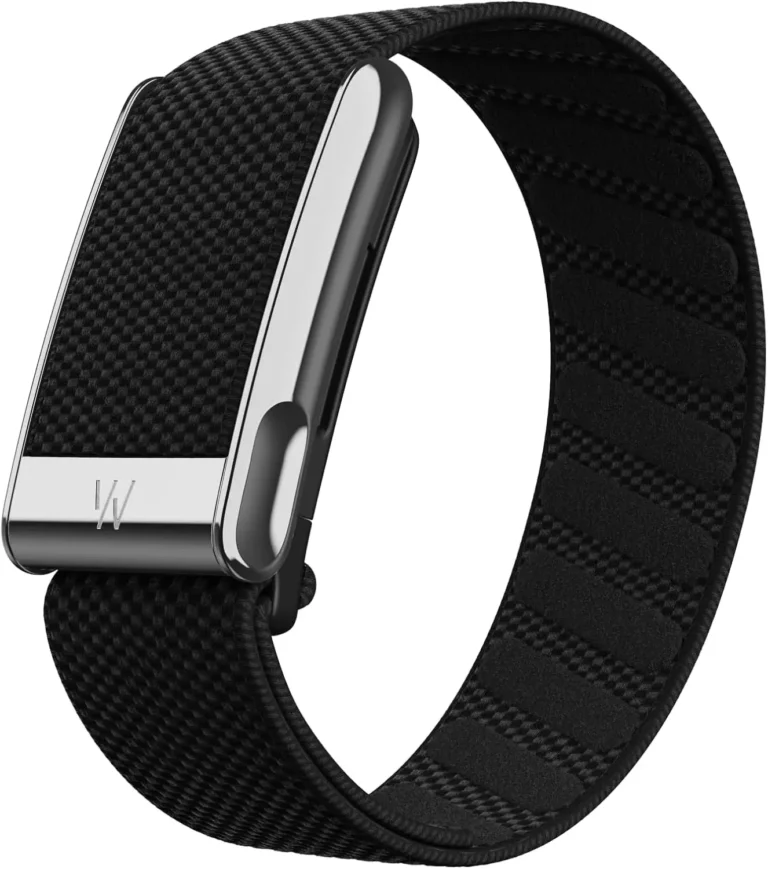
WHOOP
It is designed for people who want continuous insight into their physical performance, sleep, recovery, stress, and cardiovascular health. It is particularly suited to users who want their wearable to interpret health data and provide personalized guidance rather than simply display individual measurements.
Affiliate link — we may earn a commission, at no extra cost to you.
Oura: ring cost, membership cost and what remains without a membership
Oura splits the difference in a way that annoys people. You buy the ring outright, then pay monthly for the interpretation. Cancel and the ring still charges, still logs, still fits — but the app stops being the thing you bought. Oura is explicit that an active membership unlocks the full range of insights.
The hardware is the best-engineered thing in this comparison. Titanium, 6.09 mm wide, 6–9 days of battery depending on size and use, 100 m water resistance. I wear a ring overnight far more reliably than I wear a watch, and for sleep data that consistency matters more than sensor specs.
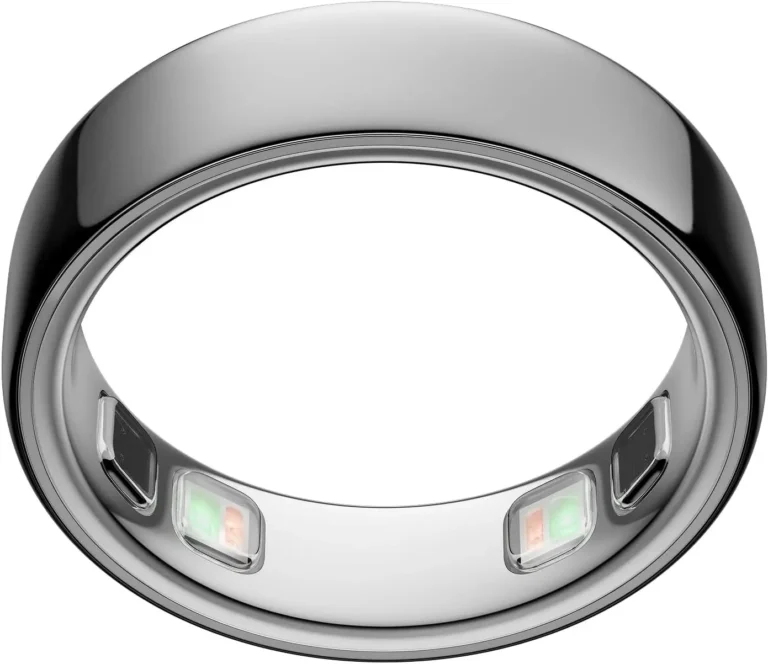
Oura Ring
Oura Ring 5 Smart Wearable - Silver - Size 9 - Fitness & Sleep Tracker
It is designed for people who want continuous, discreet tracking of sleep, activity, recovery, stress and other health-related metrics without wearing a conventional smartwatch. It is particularly suited to people interested in understanding patterns between their daily habits, physical activity and recovery.
Affiliate link — we may earn a commission, at no extra cost to you.
Fitbit: what Premium adds and what remains free
Fitbit is the gentlest exit. Premium layers on deeper analysis and programme content; cancel it and you keep the basics — activity, heart rate, sleep stages. You lose the interpretation, not the device. For a lot of people that free tier was always enough, and paying for Premium to fix inconsistent training is buying a nicer dashboard for a discipline problem.
Garmin Connect+: what changes from Garmin’s no-subscription proposition
Garmin built its reputation on not charging monthly, then introduced Connect+ as a paid tier. Garmin’s position has been that the existing features stay free and Connect+ sits above them. So far, in practice, that’s how it’s behaved — my watches lost nothing. But the proposition is no longer "no subscription, ever," it’s "no subscription required," and those are different promises.
Ultrahuman: hardware, Power Plugs and the no-subscription position
Ultrahuman’s pitch is the anti-Whoop: buy the ring, no monthly fee. The complication is Power Plugs — modular extra features sold separately. Some are included, some are paid. Before you treat it as the subscription-free option, get written confirmation of which plugs you need and whether any charge recurs. I can’t verify the current structure for every plug, and that’s precisely the kind of thing worth checking rather than assuming.
Key differences
The real divergence isn’t features. It’s what you’re left holding.
Whoop and Oura gate interpretation; Fitbit and Garmin gate extras. With Whoop there is no fallback layer at all — no screen, no offline view. Oura at least leaves you a functioning piece of jewellery that still collects. Fitbit and Garmin leave you a working watch doing the job you bought it for.
Historical data doesn’t vanish, but access does. In my experience on the membership platforms, cancelling doesn’t delete years of sleep and recovery history — it puts it behind a paywall. Resubscribe and it reappears. That’s better than deletion and much worse than ownership, and none of these companies are obliged to keep it indefinitely.
Export quality varies enormously. Garmin is the only one where I’ve moved training files around without friction, because activities come out in standard formats other tools read. Elsewhere you typically get a data dump rather than something you can drop into another training platform and use. If you’re the sort of person who wants ten years of sleep trends in one place, that difference decides the purchase.
Subscription risk compounds. The platforms with the lowest hardware cost are the ones where the recurring fee never ends and cancellation costs you the most. That’s not an accident; it’s the business model working as designed.
Best for
You hate subscriptions and want to be left alone: a Garmin, or an Apple Watch or Samsung Galaxy Watch if you’re already in that ecosystem. One purchase, core features intact, files you can export.
You’ll genuinely use the coaching: Whoop, but only if you’ll act on the recovery score. If you already know you’ll train hard on Tuesday regardless of what the app says, you’re paying a subscription to be told you’re tired.
WHOOP
It is designed for people who want continuous insight into their physical performance, sleep, recovery, stress, and cardiovascular health. It is particularly suited to users who want their wearable to interpret health data and provide personalized guidance rather than simply display individual measurements.
Affiliate link — we may earn a commission, at no extra cost to you.
You care most about sleep and won’t wear a watch to bed: Oura, accepting the ongoing fee as part of the price.
You want a dashboard occasionally, not permanently: Fitbit. Subscribe to Premium for a month when you want the deeper view, then stop. It’s the only platform where that’s a sane pattern.
You want a ring without a monthly bill: Ultrahuman, after you’ve confirmed exactly which Power Plugs cost extra.
Buying considerations
Four things to check before you commit money:
- Do the 36-month sum at the current price. Not the launch price, not the deal price — the price on the day you buy, times three years.
- Ask what the app looks like after a lapse. If the answer is "a paywall," price that in as the real cost of leaving.
- Test the export before you’re invested. Export in month one, open the file, see whether it’s usable. Discovering it’s unusable in year four is too late.
- Be honest about your bottleneck. If you’re sleeping six hours and training inconsistently, no recovery platform fixes that — it documents it in increasing detail. Worth knowing, but don’t confuse measuring the problem with solving it.
Verdict
If you hate subscriptions, buy a Garmin. Not because it’s the most sophisticated recovery platform — Whoop’s coaching is better at telling you when to back off — but because the three-year cost is the price on the box, the watch keeps working forever, and the data comes out in formats other software reads.
The vívoactive 5 is the sensible middle of that range: AMOLED display, built-in GPS, 30-plus sport profiles, sleep scoring with coaching and HRV status, Garmin Coach plans, roughly 11 days of battery, 5 ATM. My one real complaint is the sleep tracking — it’s good enough to spot trends, but I wouldn’t treat any single night’s score as gospel, and the recovery modelling isn’t as sharp as Whoop’s.
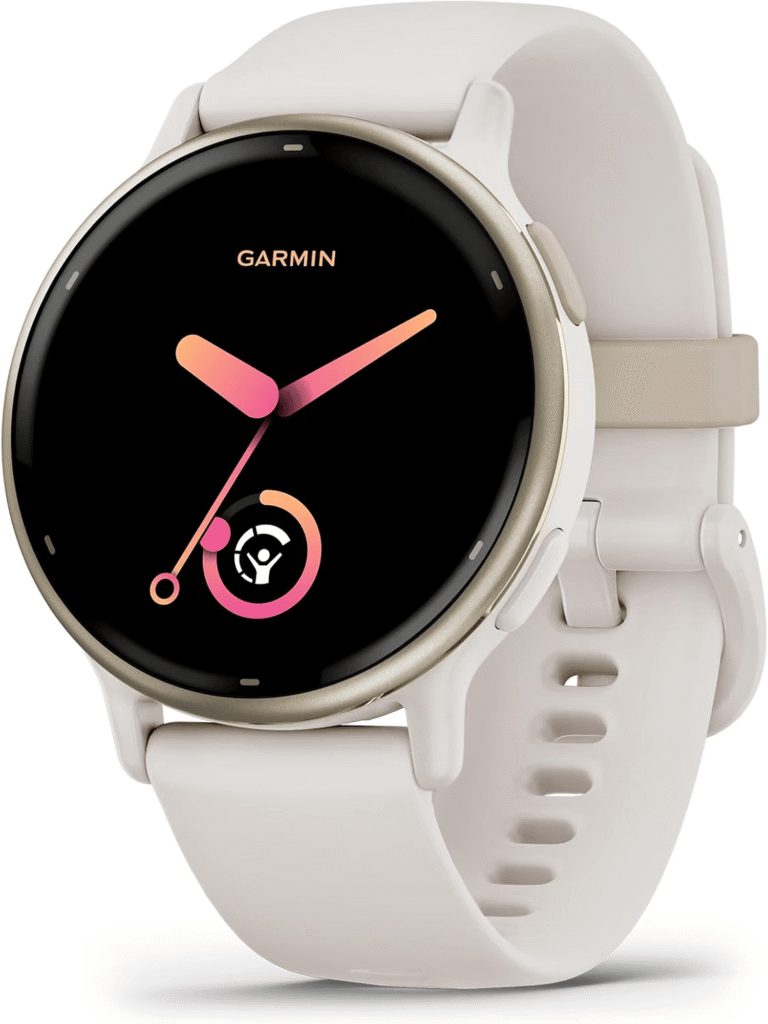
Garmin vívoactive
Garmin vívoactive® 5, Health & Fitness GPS Smartwatch, 42mm, Ivory
It is designed for people who want a single smartwatch for fitness tracking, GPS activities, sleep monitoring, everyday health insights, and general smartwatch functions. It works particularly well for users who move between workouts and everyday life rather than needing a specialized watch for one particular sport.
Affiliate link — we may earn a commission, at no extra cost to you.
If you’ll act on daily recovery guidance, Whoop earns its fee and you should buy it with open eyes about the exit. If sleep is the priority and a watch on the wrist at night isn’t happening, Oura is the better instrument. And if you already own a working watch that’s still logging your training, the correct move is often to buy nothing and spend the money on coaching, shoes, or an earlier bedtime. That’s the recommendation nobody wants to hear and the one that changes the most training outcomes.
Reader questions
Frequently Asked Questions
Does a Whoop strap work at all without a membership?
Not in any useful way. There’s no screen and no local readout, so the app is the only way to see anything, and the app is what the membership pays for. Whoop describes the platform as fundamentally membership-based. Treat the hardware as an accessory to the subscription rather than a product you own outright.
Do I lose my sleep and recovery history if I cancel?
In my experience the history isn’t deleted — it’s locked behind the paywall and returns if you resubscribe. That’s the pattern on the membership platforms I’ve used, but no company guarantees indefinite storage for lapsed accounts. If the data matters to you, export it while you’re still paying rather than after.
Can I export my data in a format I can actually use?
Garmin is the strongest here: individual activities come out in standard formats other tools read, plus there’s a full account export. Fitbit data can be pulled through Google’s account export tools. Whoop and Oura both offer exports, but you’re more likely to get a general data dump than something that imports cleanly elsewhere. For Ultrahuman, confirm directly before you buy. Whatever you choose, test the export in month one.
Did Garmin Connect+ remove features that used to be free?
Garmin’s stated position has been that existing Connect features stay free and Connect+ adds on top, and that matches what I’ve seen on my own watches. The honest caveat is that the company has now built the machinery to charge monthly, so the promise has shifted from "no subscription" to "no subscription required." Nobody can tell you what that looks like in five years.
Is the cheapest wearable really the most expensive platform?
Frequently, yes — structurally rather than by coincidence. A low hardware price attached to a mandatory ongoing fee costs more across 36 months than a higher-priced watch you buy once, and cancelling costs you access to everything you’ve logged. Run the arithmetic at today’s prices for each device on your shortlist and the ranking often flips.
Is there a decent fitness tracker with no subscription at all?
Yes. Garmin’s watches, plus the Apple Watch and Samsung Galaxy Watch, give you full core functionality with no recurring fee, and older non-subscription models are worth considering if you want sleep and training data without a platform relationship. You give up the coaching layer that Whoop and Oura build their pitch on — which is a genuine loss only if you were going to act on it.