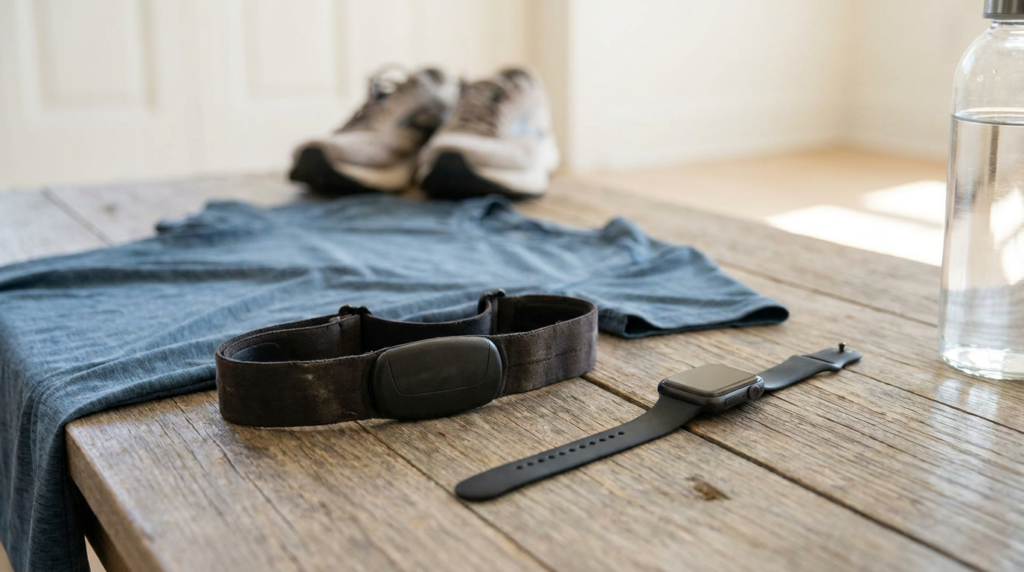
Halfway through a hard interval, your breathing says near-max effort while the watch still reports warm-up heart rate. Expensive watches can lose to cheaper chest straps when motion and rapid heart-rate changes compromise optical sensing. The real question is whether that difference changes your training.
Introduction
The pattern that made me stop trusting my watch for intervals wasn’t a wild number. It was the lag. First rep of a track session, effort already high, and the wrist trace was still climbing while I was slowing down. By the recovery jog it had caught up — right about the time it no longer mattered.
Wrist watches and optical armbands use photoplethysmography, or PPG, to infer pulse from changes in blood volume under the skin. Chest straps instead detect the heart’s electrical signals, comparable in principle to ECG sensing but without making a consumer training strap a diagnostic ECG device. PPG is more vulnerable to movement, loose fit, poor placement, reduced skin perfusion and cadence-related errors.
Accuracy isn’t a fixed property of a device. It’s a property of a device in a condition. The decision turns on where you train and whether a bad reading would actually change the session.
Quick comparison
| | Wrist watch | Optical armband | Chest strap | |—|—|—|—| | Signal | PPG blood-volume changes | PPG blood-volume changes | Electrical cardiac signals | | Comfort | Easiest for all-day wear | Less intrusive than a chest strap | Snug around the ribs | | Hard intervals | Most prone to lag | Usually more responsive than wrist PPG | Generally most responsive | | Steady training | Usually adequate | Usually adequate | Consistent, but often unnecessary | | Movement artefacts | Highest risk from arm swing, flexion and grip | Lower risk at a less mobile site | Lower risk; contact and slipping can still fail | | Main use | Resting trends and steady sessions | Middle ground when wrist placement fails | Zones, intervals and beat-to-beat data |
Individual evaluations
Wrist watch (PPG)
A wrist watch is the sensible default for resting trends, easy runs and long rides. Skin and contact are relatively stable in those conditions, and the convenience is hard to beat. Problems cluster around abrupt changes in effort, repetitive arm motion, cold skin, gripping and wrist flexion. If the trace looks plausible and doesn’t change a training decision, keep the watch. Its limitation is responsiveness when effort changes quickly.
Optical armband
Same sensor technology, better real estate. The upper or lower arm generally moves less than the wrist and isn’t directly affected by gripping a bar. That can clean up strength, HIIT and running data without putting a band around your ribs.
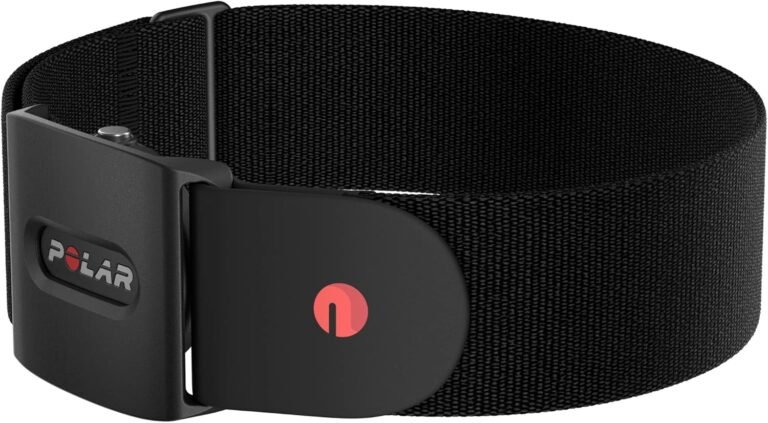
Polar
Polar Verity Sense - Optical Heart Rate Monitor Armband
The Polar Verity Sense is for people who want continuous heart-rate data during exercise without wearing a chest strap. It is particularly useful for runners, cyclists, gym users, swimmers, and athletes who find chest straps uncomfortable or restrictive. Its arm placement and swimming-goggle clip also make it useful for activities where a conventional chest strap isn’t the most convenient option. The internal memory makes it suitable for training sessions where carrying or wearing a phone or sports watch isn’t desirable.
Affiliate link — we may earn a commission, at no extra cost to you.
Polar’s Verity Sense is the straightforward option here. Polar specifies Bluetooth and ANT+ broadcasting, onboard session recording, WR50 water resistance and up to 30 hours of training battery life. It can serve a watch and bike computer simultaneously and includes a swimming-goggle clip. Limitation: it’s still optical. A loose band, poor placement or low skin perfusion can still produce noisy or delayed data.
ECG-style chest strap
A chest strap detects electrical cardiac signals instead of inferring pulse optically, so it generally follows rapid changes more closely and can provide beat-to-beat intervals.
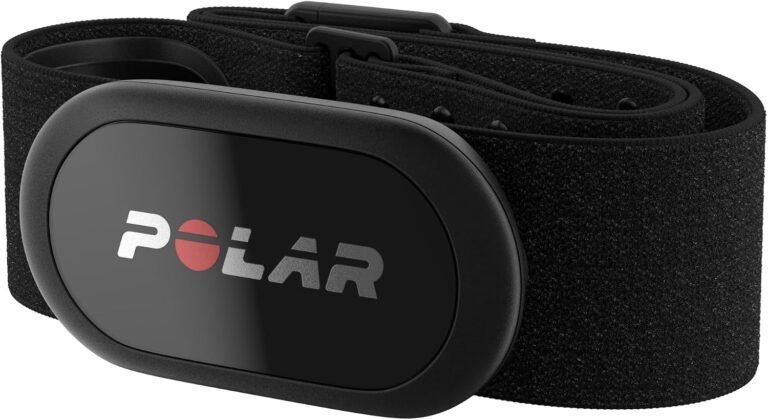
Polar
Polar H10 Heart Rate Monitor Chest Strap
The Polar H9 is for runners, cyclists, gym users, and other people who want dedicated heart-rate monitoring during exercise. It is particularly useful when heart rate is an important training metric and you want to use a chest strap instead of relying entirely on a smartwatch or wrist-based fitness tracker. Its Bluetooth and ANT+ compatibility also makes it useful with different training devices and apps.
Affiliate link — we may earn a commission, at no extra cost to you.
The Polar H10 supports Bluetooth, ANT+ and onboard recording, while Polar rates its replaceable battery for up to 400 hours. It is the practical recommendation for structured intervals or zone work where lag matters. The limitation is electrode contact: a dry strap on cold skin can spike or drop out until moisture improves the connection. It is a training sensor, not a diagnostic ECG device.
Key differences
| Training condition | What is generally adequate | What commonly goes wrong | Does it change a decision? | |—|—|—|—| | Rest | All three, with a properly fitted sensor | Loose placement, cold skin or low perfusion can weaken PPG; dry electrodes can disrupt a strap | Usually not, unless an unusual resting pattern persists | | Steady cardio | Wrist and arm PPG are usually adequate; a strap is the most consistent | Repetitive motion can create cadence lock, especially when running cadence resembles pulse; poor fit adds noise | Only if the error repeatedly pushes you into the wrong prescribed zone | | Intervals | A chest strap is generally preferred; an armband is often workable | Optical smoothing creates interval lag while rapid heart-rate changes and motion challenge the signal | Yes, when you use heart rate to control short reps, recoveries or zones | | Strength or grip-loaded work | Armbands and chest straps generally hold up better than wrist sensors | Wrist flexion, gripping and bar contact disturb wrist PPG; straps can slip or lose contact | It can affect conditioning or recovery timing, but heart rate still does not measure set quality |
These are tendencies, not guarantees. Fit and placement matter more than price, cold skin can undermine otherwise solid hardware, and no location is immune to bad contact.
Best for
Keep your watch, buy nothing if your training is mostly easy-to-moderate steady work and you use heart rate for trends rather than precise zone compliance. A strap won’t change a single decision you make.
Buy an optical armband if wrist placement or comfort is the problem, particularly during lifting, HIIT, swimming or sessions built around gripping and wrist flexion.
Buy a chest strap if you run or ride by prescribed zones, do short intervals, or need beat-to-beat intervals for HRV.
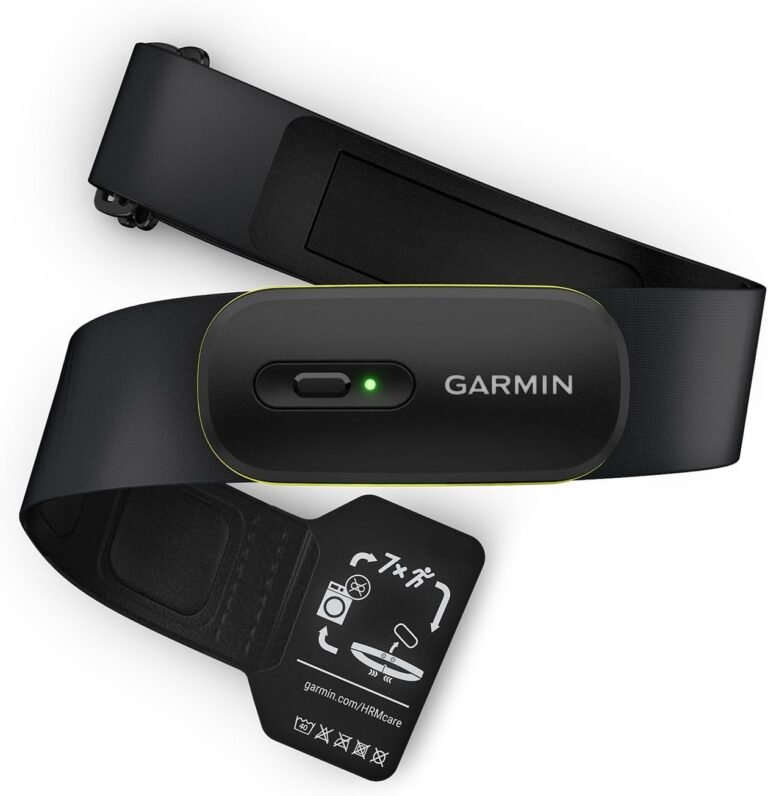
Garmin
The Garmin HRM 600 is for runners, cyclists, and other serious fitness users who want dedicated heart-rate monitoring plus additional training data that a basic chest strap cannot provide. It is particularly useful for people already using compatible Garmin equipment and who want running dynamics, HRV, onboard workout recording, or heart-rate data during activities where wearing a smartwatch is inconvenient. It can also make sense for athletes who want their training sensor to remain useful across different activities rather than serving only as a live heart-rate transmitter.
Affiliate link — we may earn a commission, at no extra cost to you.
Garmin’s HRM 600 is the data-rich option for someone already using a compatible Garmin watch. Garmin says it can record workouts independently and provide running-dynamics metrics alongside heart rate and HRV. The catch is that several features require compatible Garmin hardware. If you won’t act on those extra metrics, you’re paying for numbers you’ll scroll past.
Buying considerations
Check the connection type first. If your bike computer or gym equipment wants ANT+, a Bluetooth-only sensor is a bad purchase; dual-Bluetooth matters if you want a watch and a head unit reading the same sensor simultaneously.
Check whether you need onboard memory. It’s genuinely useful if you train without a phone or watch — pool sessions, classes, lifting — and irrelevant if a device is always with you.
Battery style is a real preference, not a spec-sheet detail. Coin cells mean no charging routine and an eventual replacement; rechargeables mean one more cable and one more thing to forget.
Fit decides accuracy more than the price does. A strap that rides down or an armband worn loose will underperform cheaper hardware worn properly.
Verdict
Here’s the decision rule, and it isn’t a ranking.
Keep the watch when its readings are plausible and don’t alter your training decisions. Consider an optical armband when wrist placement, flexion or chest-strap comfort is the main problem. Use a chest strap when rapid changes and dependable zone or interval data matter.
The cheaper strap beats the expensive watch precisely where the watch’s sensor is weakest, which is a narrower window than strap evangelists imply and a much wider one than watch marketing admits.
If your resting or exercise heart rate remains unusual across sessions, especially with chest discomfort, unexplained breathlessness, palpitations or feeling faint, get clinical advice. That’s not a hardware problem to debug.
Reader questions
Frequently Asked Questions
Are chest straps always more accurate?
No. They are generally more responsive during intervals and less vulnerable to motion artefacts, but dry electrodes, poor fit, slipping or wireless dropouts can still produce bad data. At rest or during steady training, a properly fitted wrist or arm sensor may be entirely adequate.
Why does my watch heart rate match my running cadence?
The optical algorithm may have locked onto repetitive arm movement instead of pulse. A suspiciously stable reading near your step rate, or sometimes a simple multiple of it, is the classic sign. Tightening or repositioning the watch may help; an armband or chest strap is the stronger fix.
Is an optical armband a useful middle ground?
Yes. Moving PPG away from the wrist reduces interference from flexion, gripping and some arm motion while avoiding a chest band. It is often the practical choice for lifting, HIIT or anyone who dislikes straps, but it remains vulnerable to fit, placement and low perfusion.
When is an odd reading a health concern rather than a sensor fault?
A single spike or dropout without symptoms is often a contact or motion problem. Persistently unusual resting or exercise heart rates, readings that do not match effort across multiple devices, or symptoms such as chest discomfort, palpitations, breathlessness or feeling faint warrant clinical advice rather than another sensor.