This is a buyer’s guide for cat owners weighing a several-hundred-dollar self-cleaning litter box, written around cat welfare and failure modes rather than app screenshots. It is equally for people who already own one and whose cat has quietly stopped using it.
Introduction
An automatic litter box is not a litter box with extra features. It is a small appliance with a motor, a sensor, a moving rake or rotating drum, and a waste drawer, installed in the one place in your home where your cat cannot be persuaded to compromise.
That is what makes the decision hard. Most coverage ranks these devices on cycle speed, app polish and weight logging. None of that tells you whether your particular cat will use the thing, what happens when it jams at 2am, or whether you can buy a replacement rake in two years. This guide starts with the households that should not buy one at all, then covers what breaks, then makes recommendations for the households that pass.
What to consider
Before features, work through five conditions. Any one of them is a reason to stop.
1. Kittens and very small cats. Automatic boxes use weight or motion sensing to know a cat is inside. Small animals sit at the edge of that detection envelope, and manufacturers publish minimum weights for exactly this reason. Check the figure for the specific model and treat it as a hard limit, not a guideline.
2. Senior, arthritic or visually impaired cats. Enclosed drum designs mean a step up and a step through. A cat that hesitates at a threshold, or that needs a low entry and open sightlines, is being asked to accept a worse box in exchange for your convenience.
3. Any history of inappropriate elimination or urinary disease. If your cat has soiled outside the box, has had cystitis or blockages, or is on a monitoring plan, changing the substrate, the enclosure and the noise profile all at once is the wrong intervention. Litter box changes are a recognised stressor, and cats with a history of house-soiling are the least forgiving group.
4. A multi-cat home already short on boxes. Standard feline behaviour guidance — including the AAFP and ISFM environmental needs guidelines — recommends one box per cat plus one. Replacing your only box with an automatic unit does not increase provision; it reduces choice while adding a machine. Buying one is only sensible on top of adequate manual provision.
5. No floor space, or no tolerance for downtime. These units need a power outlet, clearance for the drawer, a litter mat, and space nearby for a manual backup. If you cannot fit the backup, you cannot fit the system.
Buying criteria
If your household passes the gate, check these before anything else:
- Published minimum cat weight, and where your cat sits relative to it. Not "suitable for all cats" in marketing copy — the actual number.
- Entry height and internal size. Your cat should be able to turn around fully and squat without touching the walls.
- Safety sensing behaviour. Look for anti-pinch or occupancy detection that halts and reverses the cycle, and for a stated delay before cleaning starts.
- Litter compatibility, stated by the manufacturer. Nearly all of these mechanisms are built around hard-clumping clay. Crystal, pine pellet, paper and soft-clumping litters are common causes of jams and smearing.
- What happens on power loss. Does the cycle resume, park, or leave the drum mid-rotation? Is the box still usable unpowered?
- Waste drawer access and liner type. Proprietary waste liner bags are a recurring cost; check whether standard bags fit.
- Warranty length and, more importantly, parts. Ask whether rakes, sensors, drawers and motors are sold separately, and who pays return shipping on a claim.
- Noise. A quiet cycle matters in an apartment, and matters more to the cat than to you.
- Cleanability. You will hand-wash this thing. Check whether the drum or pan separates from the electronics.
Recommended products
Two automatic units are worth attention here, split by cat size and household load, plus the consumable that determines whether either works.
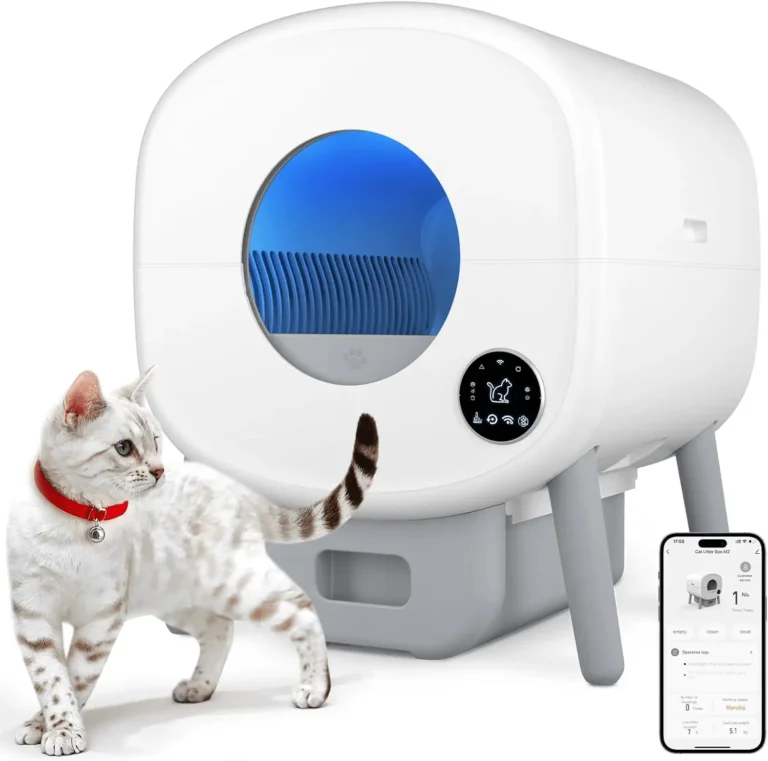
For multi-cat households, the constraint is waste volume, not novelty. A larger-capacity unit means the drawer fills more slowly and you are not defeating the purpose by emptying it daily. The Cumrige is positioned at that end: large capacity, safety sensing and app control for remote visibility on days you are out.
Cumrige
Cumrige Automatic Litter Box,Safety Sensor,App Control,95L Large Capacity
Designed for cat owners who want to automate routine litter-box maintenance. It is particularly suited to busy households and owners who want a larger-capacity system that can reduce the frequency of manual scooping while adding connected control through a smartphone app.
Affiliate link — we may earn a commission, at no extra cost to you.
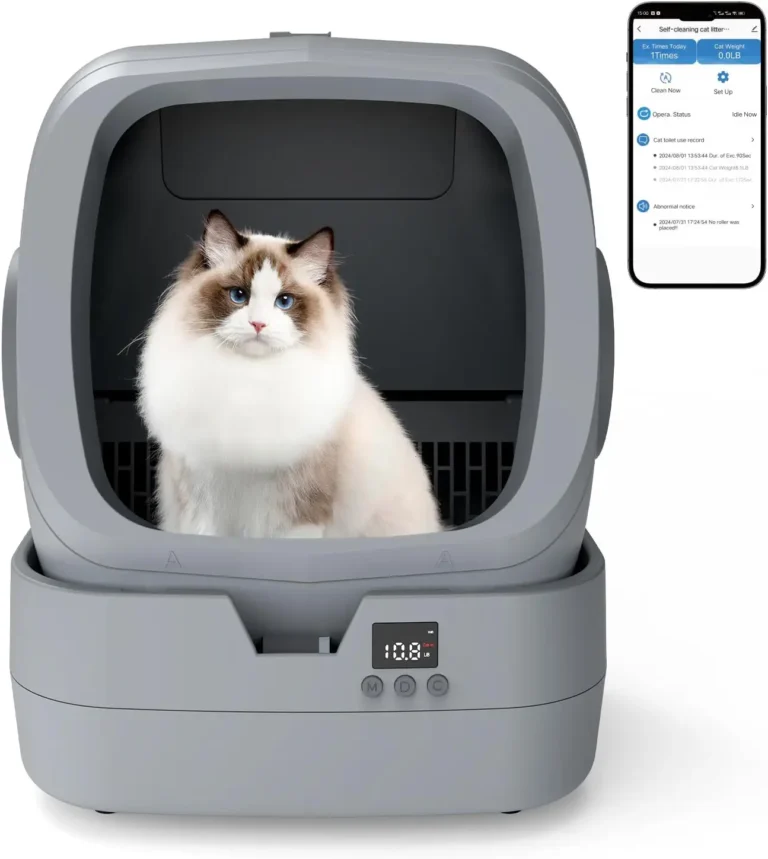
For single-cat homes, or households with medium-sized cats, a compact unit with weight monitoring is the more sensible spend. Weight tracking is not a diagnostic — treat any trend it shows as a prompt to call your vet, not an answer — but a logged change in visit frequency is genuinely useful early information. The UPFAS covers this bracket with app control, quiet operation and anti-pinch protection. Note its stated suitability for medium cats and kittens and check the minimum weight against your own cat before ordering.
UPFAS Automatic Cat Litter Box
UPFAS Automatic Cat Litter Box Self Cleaning - APP Control - Weight Monitoring - Ultra-Quiet, Medium Cats and Kittens Litter Box, Safe Anti-Pinch
Designed for owners of medium-sized cats and kittens who want to automate litter cleaning while keeping track of aspects of their cat’s litter-box activity. Its combination of automatic cleaning, app connectivity, and weight monitoring makes it suited to tech-oriented pet owners.
The litter matters more than the box. Hard clumps survive the rake; fragile clumps break, smear and coat the mechanism. Low dust protects both the sensors and your cat’s airways. Unscented is the safer default, because scented litter is a common reason cats reject a box outright.

Dr. Elsey's
Dr. Elsey's Ultra UnScented Clumping Clay Cat Litter 40 lb. Bag
It is designed for everyday cat litter-box use, particularly for owners looking for strong clumping, odor control, low dust, and reduced tracking. It is also suited to multi-cat households and certain sifting or mechanical litter-box systems.
Affiliate link — we may earn a commission, at no extra cost to you.
Buy the litter first and run it in your existing manual box for a week. If your cat objects to the substrate, you have learned that for the price of a bag rather than the price of an appliance.
Comparison
Cumrige — larger capacity, safety sensor, app control. Best where waste volume is the binding constraint: multi-cat homes, or owners who are away for full days. Needs the most floor clearance of the two.
UPFAS — compact, app control, weight and usage monitoring, ultra-quiet, anti-pinch. Best for one medium cat in an apartment, where noise and footprint matter more than drawer size.
Both depend on hard-clumping clay litter and both require a manual box alongside them. Neither publishes failure rates, and I have not seen independent reliability data for either; assume you are buying on design intent, not on proven longevity.
Best for different users
Two or more cats, adequate boxes already in place: the Cumrige, added to your existing provision rather than replacing it.
One medium adult cat, apartment, noise-sensitive building: the UPFAS.
Kittens, seniors, arthritic cats, or any cat with a soiling or urinary history: neither. Buy a good manual box and spend the difference on litter and a mat. A high-sided open box with a lowered front entry gives a cat easy access, open sightlines and no moving parts to reject.
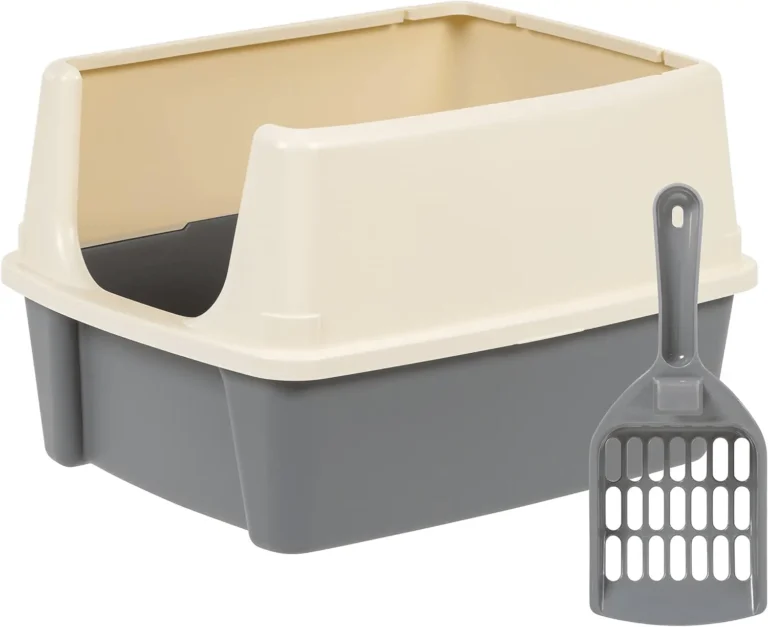
Amazon Cat Litter Box
It is designed for everyday litter-box use, particularly for cat owners who want an open box with higher sides and an accessible front entry. The design can also be useful for larger or older cats that may benefit from easier entry and exit.
Affiliate link — we may earn a commission, at no extra cost to you.
Everyone who buys an automatic box: the same manual box, kept in a different room, permanently. This is not a transition aid you retire after a month.
What to avoid
Replacing your only box. The single most common way this purchase goes wrong. The cat now has one option and it hums.
Using the litter the box didn’t ask for. Crystal and pellet litters are the usual culprits behind jams, and soft-clumping formulas leave residue that fouls sensors.
Treating app data as clinical information. Weight and visit logs are trend signals for a vet conversation. They are not a substitute for one.
Buying on cycle count. More frequent cleaning is not better cleaning, and a box that cycles the moment your cat steps out is a box some cats will avoid.
Assuming the warranty covers the failure you’ll actually have. Motors and sensors are the parts that die. Check whether they are covered, whether they are sold separately, and what the return shipping arrangement is on a bulky appliance.
Ignoring the tracking problem. Enclosed boxes still throw litter. A litter mat at the exit is a cheap fix for the mess these devices do not solve.
Final recommendation
For the typical reader of this guide — two adult, healthy, average-sized cats in an apartment, no soiling history, boxes already at one per cat plus one — the Cumrige is the sensible buy, on capacity rather than app features. If you have one medium cat and a shared wall, the UPFAS is the better shape of the same idea.
Budget for the whole system, not the appliance: hard-clumping unscented clay litter, a mat at the exit, waste liners, and a manual box in another room that stays there for the cat’s life. If any one of the five stop conditions applies to your household, the correct answer is a high-sided manual box and good litter. That is not the consolation prize. For a lot of cats it is the better outcome.
Reader questions
Frequently Asked Questions
Is an automatic litter box safe for cats?
For healthy adult cats above the manufacturer’s stated minimum weight, the mechanical risk is managed by occupancy and anti-pinch sensing that stops or reverses the cycle. The residual risks are the ones sensors cannot address: a cat too light to trigger detection, a cat that cannot physically enter comfortably, and a cat startled into avoiding the box altogether. Kittens, small cats and mobility-impaired cats are the groups I would not put in one, and I would say the same for any cat with a history of urinary disease until the vet says otherwise.
What happens during a power cut?
Behaviour varies by model, so read the manual before you buy. In general terms, expect the unit to stop wherever it is, which may leave the drum or rake mid-travel and the box partly or fully unusable. Waste already in the drawer stays there and will smell. This is the single strongest practical argument for the manual backup box: an outage, a tripped socket or an unplugged cable should never leave your cats without a usable toilet.
How do I clean an automatic litter box, and how often?
Empty the waste drawer every two to three days for one cat and daily for a multi-cat home; a full drawer is what makes these boxes smell. Top up litter to the marked line weekly, and wipe the sensor windows and the rake or drum edge at the same time, because clumping dust builds up there and causes false readings. Every four to six weeks, strip the unit, wash the litter chamber with unscented soap and water, dry it completely, and refill. Never hose the electronics module.
My cat has stopped using it. What now?
Move the manual box back into service immediately so the cat has a working option, then change one variable at a time. Check for a jam or a soiled drawer, disable automatic cycling and run it manually after the cat leaves, and confirm the litter is the hard-clumping type the mechanism expects. If the refusal started after a change, reverse the change. If your cat is straining, going more often, or soiling outside the box, stop troubleshooting the appliance and call your vet — those signs need medical assessment, not a firmware update.
Automatic litter box vs traditional: does it really save time?
It moves the work rather than removing it. You stop scooping daily and start emptying a drawer, topping up litter, wiping sensors and doing a full teardown clean every few weeks. The genuine wins are odour control between cleans, remote visibility while you are out, and usage logging that can flag a change worth a vet call. If your only goal is less mess, better litter and a mat at the exit deliver a large share of that for a fraction of the outlay.